


Dniprometyz TAS G4Si1 wire successfully passed tests at the E.O. Paton Institute of Electric Welding
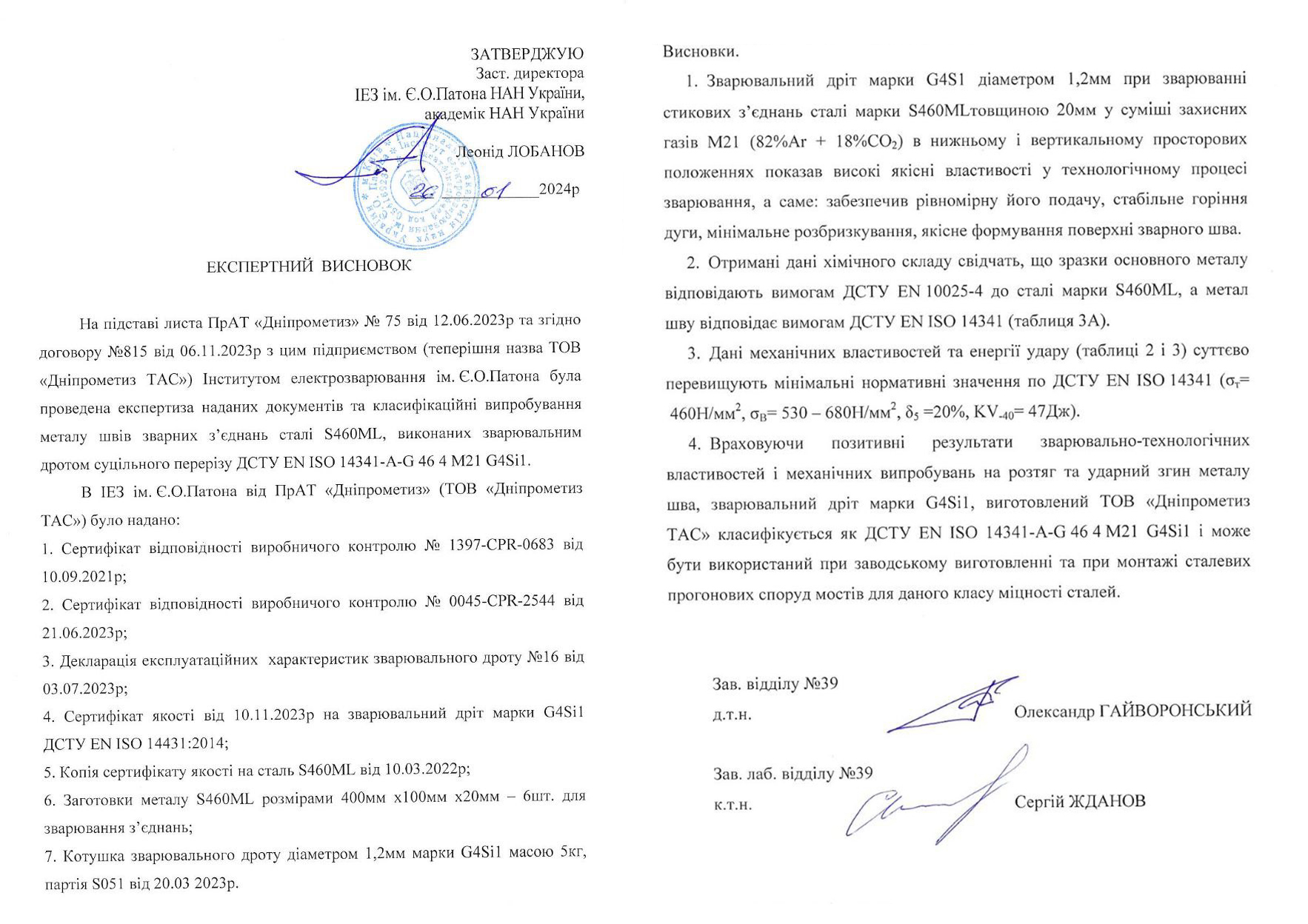
Dniprometyz TAS G4Si1 wire successfully passed tests at the E.O. Paton Institute of Electric Welding and can be used in the factory manufacturing and installation of steel bridge structures.
We are proud to announce that the wire manufactured by our company DNIPROMETYZ TAS has been recognized as a reliable and high-quality product. After rigorous testing at the renowned institute, we have received positive results, indicating the high efficiency and excellent quality of our welding wire.
The use of G4Si1 wire is crucial in the process of assembling steel bridges, ensuring the strength and reliability of the structures. We are confident that our product will help enhance the quality and durability of bridge constructions.
Assembly welding is one of the main technological processes in the creation of modern structures of steel bridge spans. Most bridges with spans of 100 m or more around the world are built from metal, mainly from high-quality low-alloy steels. Bridge structures operate under the most severe operating conditions. Therefore, the use of advanced technologies, including welding, determines the reliability and safety of the structure. At first, welding in bridge construction did not have such a resounding success as in other industries. The main doubts were raised about the reliability and performance of welded assemblies. The main arguments against the use of welding were based on the phenomenon of weld fatigue due to insufficient viscosity of the deposited material. Therefore, initially welding was used only in repair and restoration operations. One of the most famous welded bridges is the Paton Bridge. This is one of the bridges across the Dnieper in Kyiv. The bridge is named after academician Evgeniy Oskarovich Paton, who was its chief designer. When designing the bridge, E.O. Paton was the first to propose using modern technology—electric welding—instead of riveted connections when installing the main beam girders. During the installation of the bridge, more than 10 kilometers of welds were made. At the time of construction, it was the largest all-welded bridge in Europe, in which for the first time all seams, including installation ones, were made using automatic welding.
We continue to develop and constantly improve our products, expanding their application areas. Our goal is to meet the market’s demand for high-quality and reliable construction materials.